Thursday, May 30, 2013

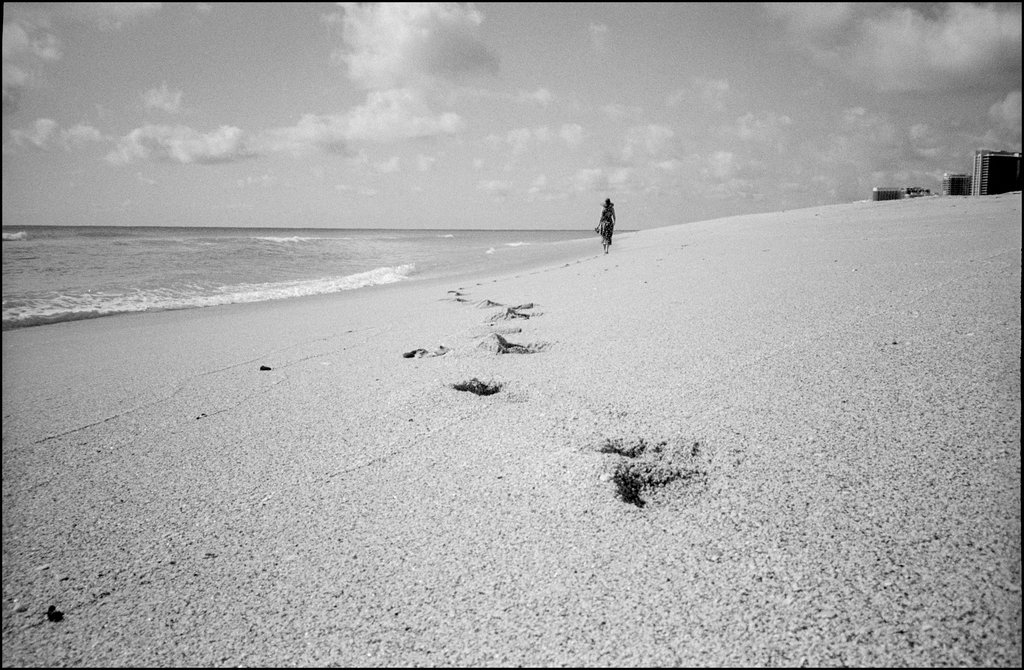
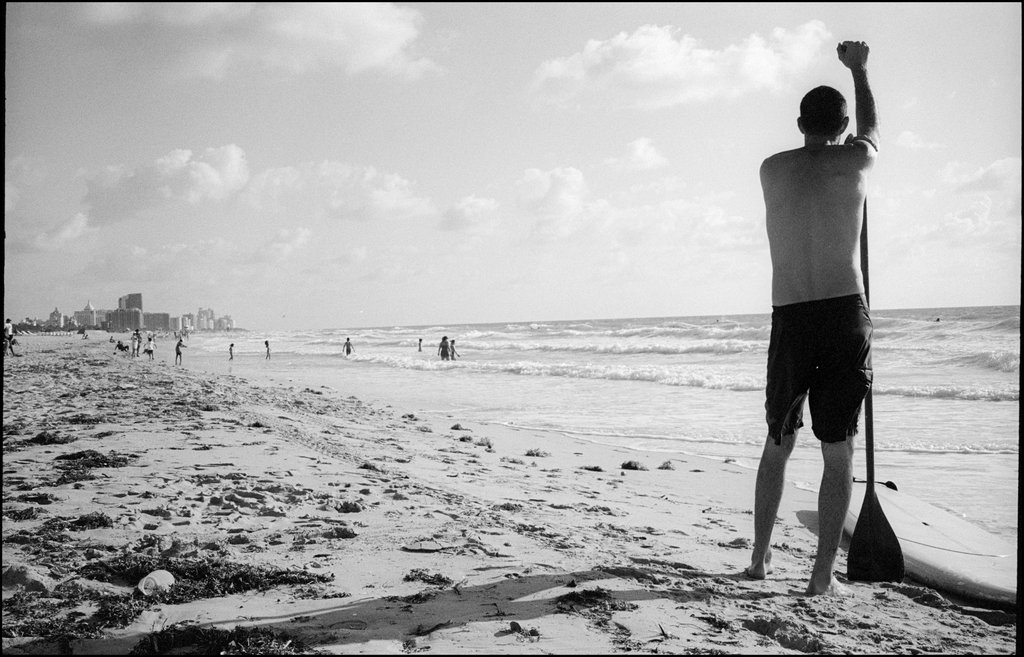
Morning at Haulover Beach

AR400-332-02pr1sm Haulover is my favorite beach. In the morning it is usually deserted.

Friday, April 26, 2013

28:22

Yesterday I run in Downtown Miami in a company of 25000+ people. My time is 28:22, which is about the same as the last year (27:40) when the photograph was taken and at least 5 minutes better compared to 2004, first time I run the race. .

Wednesday, April 10, 2013

Of What Use Are Lens And Light To Those Who Lack In Mind And Sight?

Among many pieces of wisdom associated with photography this maxim is one of the oldest and most loved. It had been cited numerous times in many books and articles. I always wanted to know the origin of it, but never been able to get past the few clues available in the open sources: it is anonymous, it is translation from Latin and it is from the old coin of one of the medieval German states (Brunswick). The coin (thaler) presumably dated 1589. Here is the example of such a source:

Tuesday, March 26, 2013

Garry Winogrand's book

While I can imagine the version of my life where I do not buy this book, the question remains: would this imaginable life be complete and sound? Would it actually worth living?

Sunday, March 24, 2013

Street Photographer In His Element

I rarely shoot digital/color, but yeaterdey at Leica Store Miami event I tried the new Leica M-E with 28mm lens and liked it since it has the same feeling and in many ways similar to my Leica M2 circa 1962. Unfortunately, the new camera died after few clicks; I put the lens on my M2 and continued shooting B&W film. I figured Buddha does not want me to shoot either digital or color. So be it.

Wednesday, March 20, 2013

Leica M Photo-Walk

Leica store in Coral Gables holding an open photo-walks this week to promote their M system. The official name of the event is "Discover the Leica M-System". They have new M along with older M Mono and M9 for participants to try. The first photo-walk will be Friday 10AM-12AM and the second (the one I am going to) is Saturday 3PM-5PM. RSVP to RSVP@leicacamerausa.com and do not forget to bring your own SD card.

Wednesday, March 13, 2013

Hammock park

AR400-301-12pr1sm This is from RRT gathering in Matheson Hammock park on Old Cutler road. RRT AKA "Russian Round Table South Florida" is a social club I am visiting sometimes; here we were celebrating the Soviet Army day Feb the 23rd. Nice weather, beautiful SF scenery and mother's tongue all around; the further in the event, the louder it was:) For this occasion I used something appropriate: FED 2 camera with 50mm Industar lens.

Tuesday, February 26, 2013

Don't fancy Leica!

This is a "quick and dirty" translation from Russian of the article I found in the old "Soviet photo" magazine, issue dated Jan 1934 with portrait of Stalin on its cover (of course, what else?):

Re-publishing today a photography article this old deserves at least an explanation, so here it is:
There was a time when 35mm film was rapidly gaining popularity while older types of larger format cameras and films, still in use at the time, were slowly becoming outdated. Most of the new 35mm cameras of the period were extremely expensive and out of reach of regular soviet citizen for the obvious reasons:
  • the production of 35mm Leica copies (FEDs) just started, they were not yet available for order;
  • there was no free trade with abroad;
  • the cameras actually were expensive;
  • the salaries were very low.
But still, part of the soviet elite and professionals who by nature of their work had to use photography were looking to acquire the latest equipment: it was fashionable, it was cool, it was better then the old, and in almost all cases it was (ta-dam) ... Leica! Few examples come to mind:
  • ...poet Bulat Okudjava in his teenage years before WWII imagining himself in "...black pants, white Apache shirt and "Leica" hanging from the shoulder" (see his short story "Certain failures among continuous successes");
  • ...writer Ilya Ilf buying "Leica" using money borrowed from Eugene Petrov, his co-author and friend; Eugene was joking that after this he had "no money no co-author", because Ilf was busy photographing and did not have time to work and earn salary; with this camera Ilf photographed the USA in mid-30s, which resulted in their illustrated book "One-Story America", published in USSR in 1936 and known to English readers as "Little Golden America".
The article below is written by soviet official, Semyon Evgenov, director of SOYUSPHOTO trust. SOYUSPHOTO was created in 1931 by decree of the ruling communist party as the country's main propaganda organization to produce and publish photo-illustrations for Soviet magazines, newspapers and other types of publications, so despite the fact the article was published in the widely distributed photography magazine, it was truly meant to be read and fully understood by the few elite readers, as it was usual for Soviet press of stalin's period. It is poorly written in crude soviet official language I tried to imitate in translation, where photography gear referred as "photography weapons" and photographers as "photo-workers". The author is following his absurd line of reasoning minding his own petty goals -- like saying something bad about some photographers and something good about others (by coincidence, the "others" work for the author in his SOYUSPHOTO trust), but at the same time it is interesting and funny to see the parallels to the 70s photography discussions "automatic vs manual", early 2000s topics "film vs digital" and so on. Well, enough said, here is the article:

Monday, February 18, 2013

Little Havana, backstage

AR400-295-06pr1sm
This winter I started walking working class neighborhoods of Little Havana. I liked it better then the Calle Ocho. Yes, it is less iconic, never too crowded and there is nothing here to catch tourist's eye, but I'm not a tourist, more of a local already. Here are the few frames from the last week's wanderings:

Wednesday, February 13, 2013

Kill it before it lays eggs


I bought this can of Kodak 35mm cine version of Tri-X film from late 50s in a hope to find it exposed, but it turned down to be not. So I used the opportunity to check my old film development process on it. First, I put it in my FED-2 rangefinder camera and exposed at 50 E.I. (originally it was 320 ASA but 50 ASA is my best guess of what's left of it), I also bracketed with +1 and +2. Then, I used my standard process for developing fresh Tri-X (4.5 min @ 75F/24C in TMax 1:4) and it turned out to be heavily fogged, barely ptintable/scannable. Then I developed it in 10% HC-110 at 50F/10C for 2.5 minutes (the time had been calculated based on test). It came out ok. Here is how it looked after the development:

Friday, February 1, 2013

TOY WORD by Victor Ginzburg


I published this book of photographs for my friend Victor Ginzburg.
He is an avid photographer; this is the book he was working on since 2005 and it is very unusual piece, at least for the modern photography book: all film, all square, all color. So, what is it, this book? Well, it has 82 pages and 72 photographs and almost no text in it, and it is clearly an art book, but can it be narrowed to more specific genre or school of photography? Asking myself this question, I had to admit that while I love this book immensely, I do not have the ready answer, at least not the verbal one. It is easier to limit the field by saying what this book is not: while many photographs in the book will qualify as a street photography, the book itself is not. Likewise, while author has traveled the world and many photographs where taken far from New England where he lives, is not about travel. Also it isn't a book about his family and friends despite the fact that many of the photographs are picturing his family and his friends.
So yes, I do not have the full and complete answer...still, I can point to the few clues:

- the color is very important for the book. As a black and white, it would not exist.
- the photography as art often has something of painting's legacy. This one has a lot of it.
- it is centered around humans and sure qualify as human-interest photography.

All in all, it is beautiful piece of art and I happy to have my copy.
The book is not expensive and can be had for ~$20 shipped to US location, see here:

http://www.magcloud.com/browse/issue/502656

To help you decide, here are the few pages from the book:

Wednesday, January 30, 2013

Wynwood in January 2013

AR400-285-31pr1sm
Wynwood, Leica M2/35mm Scopar/Tri-X @ E.I.400 in TMax developer
Few more photographs out of many I took in Wynwood recently:

Friday, January 25, 2013

Miami Street Photographer: a facebook page


I started the page for my photos at facebook. There will be more photographs than here, some of my older work, all of new. I'll post 2-3 pictures per day. Please "like" it if...if you like it :)

Monday, January 21, 2013

Night in Wynwood II

AR400-282-01pr1sm

Again, Tri-X at E.I.1600 in Leica M2 but this time with Cosina's 35mm f/2.5 lens.
All on 1/15 and wide open.

Saturday, January 19, 2013

Olympus XA again

AR400-281-33pr1sm
I switched few things last week: went to TMax developer from Diafine for Tri-X and stopped pushing the film; I tried again little Olympus XA which had been sitting on the shelf for the last 2 years. So far I like both changes. What killed my interest in XA last time was Ilford HP5+ at E.I.800; it was not very good combo. Tri-X @ E.I.400 is much better.

Friday, January 18, 2013

Two Stories Plus X

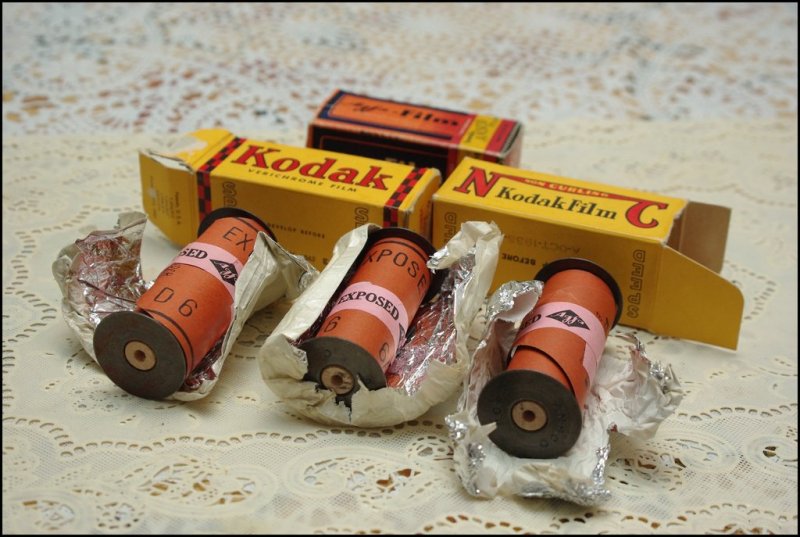
I have little archive of five old undeveloped rolls I received from the ebay seller in Rochester, NY; there were 3 separate auctions somewhere in 2010; so I developed the rolls in 3 batches with the last one done just recently. Let's start with the first 2 rolls I developed in the first batch --
..........................................................................................................
Here they are, the two 620 Plux-X rolls of intense green:


The condition could be better: the hardest rolls to separate from backing paper so far; I had to tear the paper to pieces and still some of it stayed, glued to the film.
The film itself was alive as quick test revealed; developed it at 40F/4.5C in 12% HC-110.
Here is the piece of developed film caught on camera before scanning:


Frame numbers got themselves happily transferred to the emulsion; there are dead round yellow spots where emulsion touched the hot metal of the spool's rusty cheeks and holes, holes, holes...the roll must had been stored in the attic or garage for ages, where it became really hot in the summers.

Still, there were some recoverable images:

Sunday, January 13, 2013

Boy scouts from Brownie Six-20 flash

I found this camera on *bay in 2010. I have the record somewhere. I know I received it from Springfield, Oregon. It had exposed roll of 620 Kodak film in it; I bought it because of this forgotten, never developed film. I thought I developed it long time ago, there in 2010, and that it was empty. It was clear case of a false memory: while recently giving the camera to a friend as a present, I checked what's inside (good habit!) and presto! It was sitting there, red roll of 620 Kodak Verichrome Pan.
Verichrome Pan is relatively new film, it went on sale in 1956. So these are late 50s or 60s:

Wynwood at night

AR400-279-31pr1sm

It was...windy, dark, surreal. Miraculous.
I had just few frames left in my M2...have to return there soon.
Leica M2/28mm/Tri-X at E.I.1600 in Diafine.

Thursday, January 10, 2013

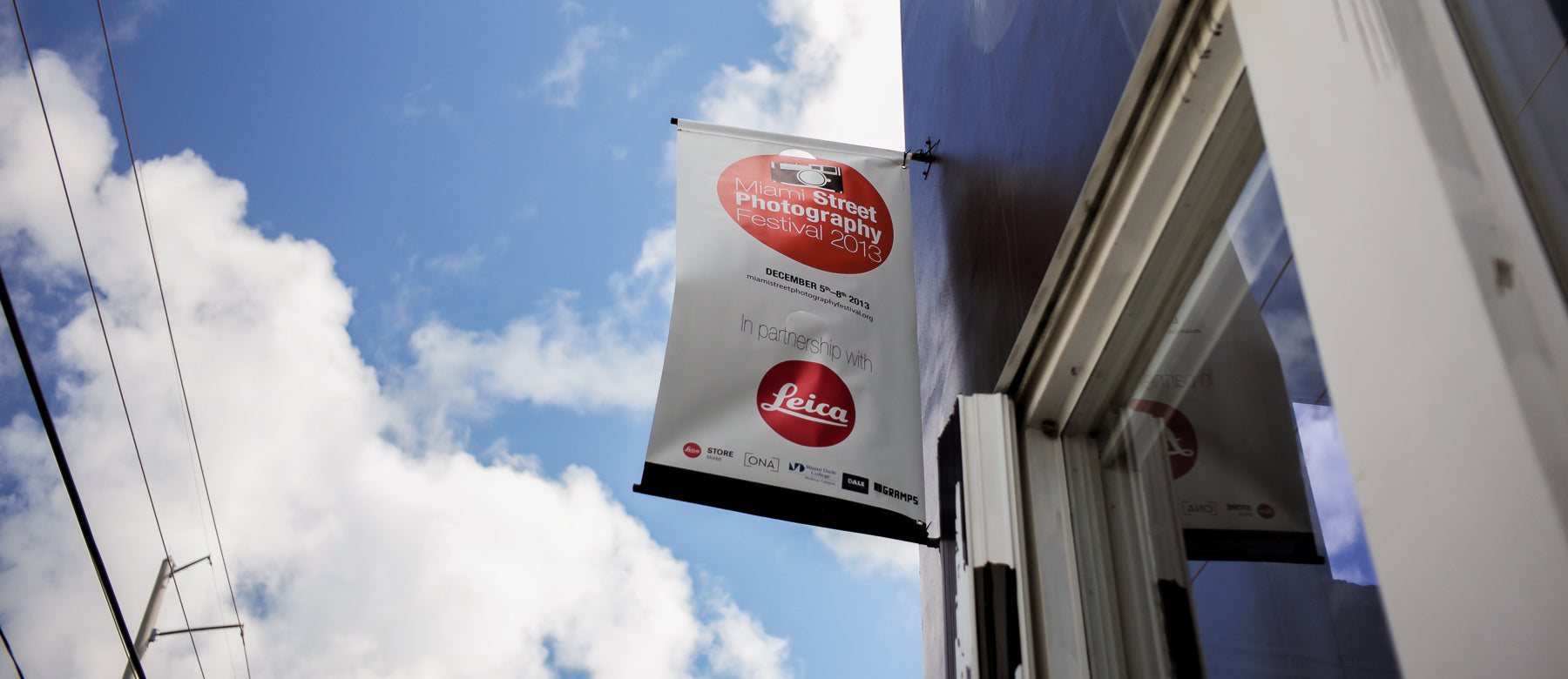
Miami Street Photography Festival: how it was


Here is the long overdue report on the Miami Street Photography Festival I was busy with in early December and on Alex and Rebecca Norris Webb's master-class I took during the festival. I actually posted a piece on my LiveJournal blog on the subject, but it was all done in Russian. So if you can read and, more importantly, understand Russian, check it out: ***here***

For the rest of you western folks, let's translate it into some Runglish...

Thursday, January 3, 2013

Kentmere 400 film vs Tri-X in Diafine


I have not recently reviewed any film/developer combinations in this blog. There is a reason for this: film is well known thing, why bother with the reviews anyway? Well, if it is Tri-X of HP5+ than it's true, they have been around for a while, along with Diafine 2-bath developer I'm using here, but Kentmere 400 is all new animal, at least for me. So I bought 100ft roll for $29.95 from Adorama and tried it, along with Tri-X, in the same Leica M2 with 50mm f/2 Planar lens from Zeiss. It is not very scientific comparison per se; I just needed some feeling of it. I exposed Tri-X at E.I.1200-1600 and Kentmere at E.I.640-800, as recommended for Diafine. I looked at the resulting film strips on the light table and scanned them.
Looking at the negatives: Kentmere is drying flat, which is good. My version of Tri-X (Arista Premium 400 from Freestyle Photo) is not. The Kentmere is a bit "flatter" in terms of tonal gradations, compared to Tri-X. The Tri-X grain is bigger but I also like it more, the dense grain of Kentmere has not impressed me much (see the fragments below). On the night shots, Kentmere has denser blacks with less details in them. Ok, here are the shots, face to face --

Thursday, December 27, 2012

2012 slideshow

2012 year through my lens(es); almost all of the pictires are B&Ws; bye-bye color...

http://www.flickr.com/photos/emirco/sets/72157632348805196/show/

AR400-272-08pr1smAR400-271-14pr2smAR400-268-01pr1smHP5-93-09pr1smHP5-92-19pr1smPB234761pr1sm
PB194357pr1smAR100-26-05pr1smAR100-26-08pr1smAR400-261-07pr1smKT3200-18-26pr1smKT3200-18-28pr2sm
AR100-25-11pr1smAR400-259-30pr1smAR400-259-11pr1smKT3200-15-16mmpr1smAR400-246-10pr1smAR400-254-28pr1sm
AR400-247-12pr1smAR400-251-04pr3smAR400-248-24pr1smAR400-248-20pr1smAR400-249-11pr1smAR400-248-26pr1sm

Selected 2012, a set on Flickr.