Monday, October 14, 2024
Expired in 1938
I have a small archive of old Kodak Verichrome roll film I acquired some years ago. The rolls are all exposed and stored in original boxes:


Thursday, November 30, 2023
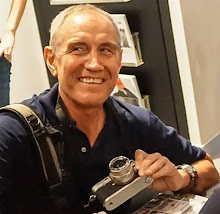
Eliott Erwitt

Here my photo of him peeking into the room before his lecture in Miami in 2014.
Taken on Tri-X / Leica M2 I think.
Sunday, December 8, 2019
Fujifilm photo walk with Fujifilm X-Pro 3 camera + 16mm f/2.8 lens

Hello All, it had been a while since I posted here...things changed.
In the government building where I work, the high security access had been implemented with X-ray machines and all the cavalry, it became a hassle to bring my film inside; I had to choose a digital replacement to my work-day-downtown-location film cameras.
I tried Leica M10-D and liked it but it is just a tad :) expensive for what it does.
I handled Sony fullframes (A7 III and few others) and actively disliked its ergonomics; so Fujifilm it is.
Yesterday I went for a walk with Fuji team around Wynwood Art District in Miami, FL. There were few of us, most chosen big SLR-form-factor-top-of-the-line mirrorless like Fuji X-T3, accompanied by substantial zoom lenses.
I took, of course, X-Pro 3 and little 16mm F/2.8 lens, a very compact setup, smaller than my Leica M2 with 35mm lens.
We went around the area which had been buzzing with activity due to Art Basel Miami time. I switched the camera's jpeg to ACROS BW film simulation with large grain I like my film photos to have and took some pictures along the route, a few of them presented below.
This was not a formal evaluation of the system, but my impressions are that this is very robust setup:
- Lens/camera provide quick auto focus;
- reaction time of the system is acceptable;
- good flare resistance;
- I liked the way LCD build with small one in the back and fold-out main one, nice idea which fits my shooting style.
While I usually shoot in black and white only now, I did processed some RAW files using FUJIFILM RAW app; hence some color images in the sequence. I was curious about Fuji film simulations, so all these color images are film sims. I liked the look of "CLassic Chrome" and "Standard Neg Hi", but that of course highly subjective, YMMV. Anyway, till next time...

.
Thursday, October 20, 2016
Interview with Yamasaki Ko-Ji

Interesting interview with Yamasaki Ko-Ji, the photographer from Japan whose book "In Osaka" I published on Amazon in 2015:
http://www.120love.me/news/2016/4/7/an-interview-with-japanese-photographer-ko-ji-yamasaki
(by Paul del Rosario, Japanese/American photographer currently living in Japan)
Tuesday, September 13, 2016
DASCO bakelite and the Langoliers

DASCO was (and the one above still is) a bakelite toy camera from 40s.
It is, in essence, a cheap piece of pressed plastic with few little metal and glass pieces.
It was made for 127 roll film.
The roll I found inside is Kodak Verichrome Pan. Kodak VP came out in mid-50s.
After the development, a few frames emerged: people, trees, automobiles.
Ah, 50s indeed (look at the cars and the hat):
Tuesday, July 26, 2016
Miami's Overtown

Overtown is a place just north of Downtown Miami.
Its use to be a real black town up until early 60s when the major highways (Dolphin, I95) were build through the area; its remnants of the past now, in a form of half-empty old structures with modern condo towers popping around here are there. Once a year,there is a street fair called "Overtown Music and Arts Festival" which I am trying hard not to miss. Yes, its not the biggest one; the weather of mid-summer is atrocious; and it is scheduled for the hottest time of the day. Still, its the best event in Miami one can photograph. Every year I bring something interesting from it.
Here are some of this year's catch:
Thursday, July 21, 2016
On Pakon film scanner
Been film scanner operator for ~20 years, I tried many Minoltas, Nikons, Epsons ugly ducklings. I settled on Epson V700 photo for preview and Nikon Coolscan V for the final scans. Using this combo for a few years now, I scanned several hundred rolls and finally got tired of the slowness and the buzzzzzz.
Recently I started looking into the operatorless scanning of a whole roll of B&W 35mm film (I shoot black and white film only, no color). I checked what's available new on the market and >>tested<< Prime Film XA, also known as Reflecta ProScan 10T/10M in Europe. The PrimeFilm XA in theory could scan the whole roll, but in my case it did not work very well. Yes, when positioned right and the stars are perfectly aligned it could produce very nice scans; it also had some intrinsic deficiencies making the process very long, involved and tedious. I returned the PrimeFilm promptly.
Last week I tested Kodak Pakon F135 scanner; this is a pro scanner intended for the photolab market; it hit the shelves a decade ago and use to cost a wopping $12000 new; I acquired a well-used specimen for ~$300.
After some testing I liked the little ugly beast and it stays. Here is what I found out, in a few words:
Recently I started looking into the operatorless scanning of a whole roll of B&W 35mm film (I shoot black and white film only, no color). I checked what's available new on the market and >>tested<< Prime Film XA, also known as Reflecta ProScan 10T/10M in Europe. The PrimeFilm XA in theory could scan the whole roll, but in my case it did not work very well. Yes, when positioned right and the stars are perfectly aligned it could produce very nice scans; it also had some intrinsic deficiencies making the process very long, involved and tedious. I returned the PrimeFilm promptly.
Last week I tested Kodak Pakon F135 scanner; this is a pro scanner intended for the photolab market; it hit the shelves a decade ago and use to cost a wopping $12000 new; I acquired a well-used specimen for ~$300.
After some testing I liked the little ugly beast and it stays. Here is what I found out, in a few words:
Tuesday, July 5, 2016
Pacific Image scanners
I recently tested these two scanners from Pacific Image:

Prime Film XE and Prime Film XA are also known as Reflecta ProScan 10T and Reflecta RPS 10M, respectively.
Resolution-wise, they both can produce scan at 4K+ dpi. The units I received both had problems:
- XA (the one at bottom) had inherent issues with its film transporting mechanism and it was a pain to align the frame properly.
- XE produced vertical stripes in the midst of the frame on some photos.
I only used them with 35mm Tri-X which is black and white film, slightly curled when recently developed.
I suspect they both will work better with modern C41 films, but I have not tested that as I have no desire to use this type of film.
I returned both.
Oh well..I will stay with my Nikon V, Minolta Multi, Minolta Scan Speed and Epson V700 Photo :D
Prime Film XE and Prime Film XA are also known as Reflecta ProScan 10T and Reflecta RPS 10M, respectively.
Resolution-wise, they both can produce scan at 4K+ dpi. The units I received both had problems:
- XA (the one at bottom) had inherent issues with its film transporting mechanism and it was a pain to align the frame properly.
- XE produced vertical stripes in the midst of the frame on some photos.
I only used them with 35mm Tri-X which is black and white film, slightly curled when recently developed.
I suspect they both will work better with modern C41 films, but I have not tested that as I have no desire to use this type of film.
I returned both.
Oh well..I will stay with my Nikon V, Minolta Multi, Minolta Scan Speed and Epson V700 Photo :D
Monday, June 27, 2016
"In Osaka": one year anniversary

Yamasaki Ko-Ji's book "In Osaka", published a year ago, had been sold on Amazon and in stores around the globe exactly (ta-dam!) 50 times. Which brings the total print run, including all the copies sold online and offline, given as a present plus author's copies, to 100 (one hundred).
Congratulations to the author!
.............................................................................................................
To celebrate the 1-year anniversary of the book's publication, we are issuing the discount code for the book which can be ordered by clicking the link above. Here it is:
5A2XWLFC
Enter this code at the >checkout< and you'll get a $10 (25%) discount.
Tuesday, May 31, 2016
The Night at Ocean
This Saturday I've got a chance to stroll the South Beach. The Ocean drive was packed with folks celebrating, flirting, kidding, snapping selfies. My Olympus XA died after years of exemplary service but Lieca M2 worked and these are the pictures (Tri-X shot at E.I.1600 and pushed to E.I.3200 in TMax developer):
Thursday, December 17, 2015
Model A from Missouri
Univex model A was a camera. A very small camera.
Here is one, next to my "Zorki 5":

Three ounces of Bakelite with a bit of glass and a few metal parts.
It was very popular among girls in early 30s, because it was cheap.
Really cheap. Seriously cheap.
Here is the page of the Official Girl Scout catalog, year 1933:

It is called there "A New Camera" with a price tag of 35 cents.
35 cents! For the price, it was not too bad.
Unlike some other cameras (Japanese "Hit", for one) it could actually take a picture.
Sometimes adults used it, but most of the Univex's users were kids.
The idea of the Univex enterprise was to make money selling film, not camera.
The proprietary Univex 00 film model A ate had been manufactured by Gevaert in Belgium.
The idea worked: Univex sold millions of ugly ducklings until 1940, when Belgium went under and suddenly 00 film was no more.
That was the end of Model A.
End of story.
I received mine from a village in rural Missouri. It had exposed roll of 00 waiting inside:
Here is one, next to my "Zorki 5":
Three ounces of Bakelite with a bit of glass and a few metal parts.
It was very popular among girls in early 30s, because it was cheap.
Really cheap. Seriously cheap.
Here is the page of the Official Girl Scout catalog, year 1933:
It is called there "A New Camera" with a price tag of 35 cents.
35 cents! For the price, it was not too bad.
Unlike some other cameras (Japanese "Hit", for one) it could actually take a picture.
Sometimes adults used it, but most of the Univex's users were kids.
The idea of the Univex enterprise was to make money selling film, not camera.
The proprietary Univex 00 film model A ate had been manufactured by Gevaert in Belgium.
The idea worked: Univex sold millions of ugly ducklings until 1940, when Belgium went under and suddenly 00 film was no more.
That was the end of Model A.
End of story.
I received mine from a village in rural Missouri. It had exposed roll of 00 waiting inside:
Tuesday, September 8, 2015
118 Kodak Verichrome roll from 1940s

I received these rolls from a antique dealer in Fayetteville, North Carolina with 2 other rolls and spools of different vintage.The roll in the center never been exposed; the yellow color film (right) was empty. So what's left is this big bad spool of 118 Kodak Verichrome.118 format roll film was introduced by Kodak in 1900 and discontinued in 1961 but it was not in wide use after early 40s because the cameras made for this film format were out of production by 1930s.
I did my usual tests and developed the roll; a face appeared from the wet darkness:
Saturday, August 8, 2015
Brownie Vecta from UK


I received this camera from the village North of Manchester, UK
Small Kodak Brownie Vecta had been in production from 1963 to 1966
Like many other brownies, it has dark lens and one shutter speed, not much to talk about.
This one had film inside, 127 Kodacolor II, exposed.
I developed the film as B&W just because silver survives the ordeal of time much better then the color dyes.
Tuesday, August 4, 2015
"In Osaka" by Yamasaki Ko-Ji at Leica Store Miami 08/20 at 7PM
Join us on Thursday, August 20, 2015 for a book presentation: "In Osaka" by Yamasaki Ko-Ji. Publisher Emir Shabashvili will present the book and talk about "Provoke" photographers and about style/time relationship in photography.
Yamasaki Ko-Ji is a Japanese photographer from Kobe who documents his daily life with street pictures taken in Osaka, where he works.
RSVP on the event page: http://goo.gl/H9hzIN
Yamasaki Ko-Ji is a Japanese photographer from Kobe who documents his daily life with street pictures taken in Osaka, where he works.
RSVP on the event page: http://goo.gl/H9hzIN
 | This event is kindly sponsored by Brooklyn Brewery. Participants will be able to sample some of their amazing craft beers during the event. Brooklyn Brewery is one of the largest craft breweries in the United States, producing a portfolio of traditional and experimental beers sure to impress any beer drinker. |
Tuesday, July 21, 2015
11x14" Prints on Arista EDU Ultra RC paper
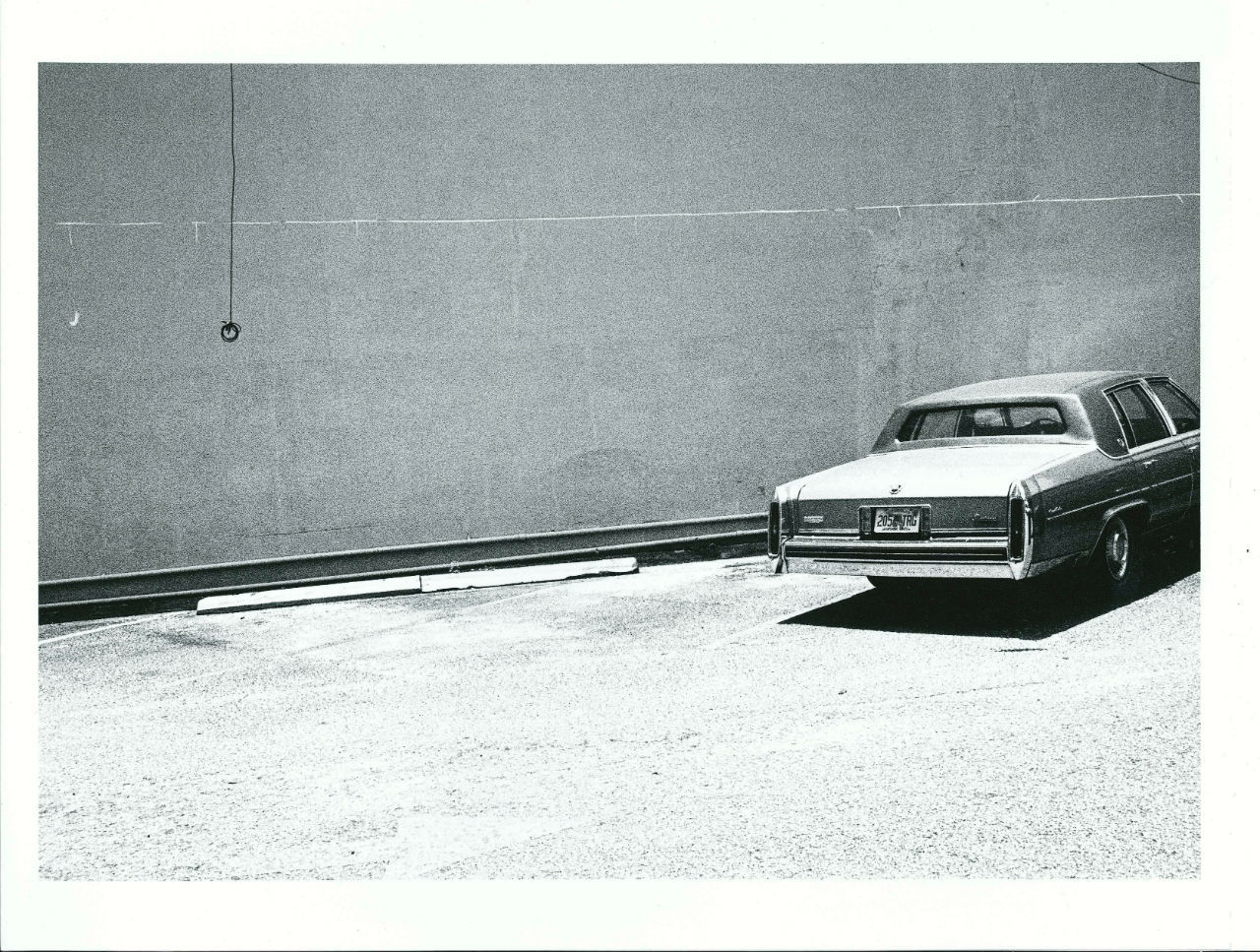
I'm out of Ilford MG IV paper and switched to Arista EDU Ultra. All I have now is 11x14 inches. Last weekend I printed a few frames from 2012 and they came out fine. The prints are somewhat more neutral compared to Ilford (I use LPD developer in 1:4 dilution) and the image takes longer to appear in developer, but otherwise the paper is great. The office scanner I used does not do the prints justice, but that is what I have for this bigger format.
Thursday, July 16, 2015
Bessa L / 25mm / Red filter : new darkroom prints
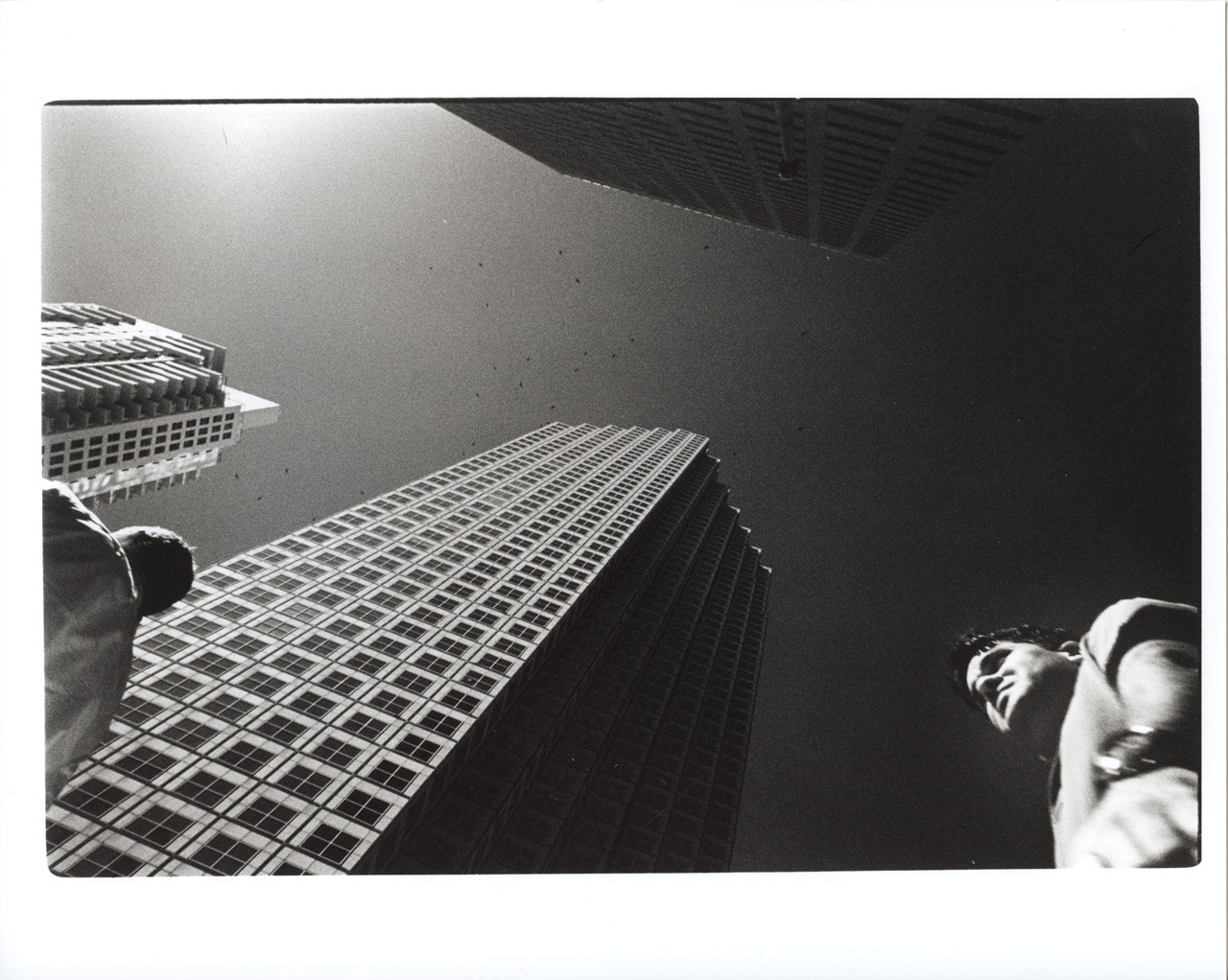
Up until now I had just the digital scans and digital prints for this series of downtown street photographs from Oct 2008. Last week I printed them in darkroom, they came out good; better than expected, better than digital!
Monday, July 13, 2015
Friday, July 10, 2015
"IN OSAKA" by Yamasaki Ko-Ji
So it happened: the >book is out<<.
Yamasaki Ko-Ji is a photographer from Kobe, Japan. He documents his daily life with pictures taken mostly in Osaka, where he has a day job. His work is truly unique for these days: all film, almost all in black and white, all printed in darkroom. He is not very well connected to the online photography community of today. He has a site all right: http://yamasakiko-ji.tk/ , but he is not on Flickr or Facebook, so his work is not widely known, but for those interested in the style of "Provoke" movement (Takuma Nakahira, Daido Moriyama etc) he is important as one of the keepers of the flame. I love his work. My style is very different but his pictures have influenced me deeply and that is why I published his book.
This post is a quick review of the book from the publisher's -- mine -- point of view.
Wednesday, April 15, 2015
Printing in dark room vs film-to-digital workflow
I started in darkroom in my early teens, somewhere in 68 or 69. Back then, everything was simple: not too many graded papers available, one developer, water from the tap, fixer and free time, which I had aplenty. I did not use any advanced techniques. Masking with my fingers for dodging and burning was the farthest it went. Because of this, there were negatives I could print easily and some I did not know how to print, the negatives too dark or too contrasty...when I had one, I just skipped it. Here is one of the prints from the time: some TASMA film pushed to 500 ISO, some old paper my father gave me:

(View from my darkroom AKA attic room. Yelabuga, 1973)
(View from my darkroom AKA attic room. Yelabuga, 1973)
Tuesday, February 10, 2015
"In Osaka" by Yamasaki Ko-Ji

Yamasaki Ko-Ji is a photographer from Kobe, Japan. Here is a dummy of his book I am working on right now. Printed on laser printer to check the layout, it became a real one the moment I attached the loose leafs of paper to each other with binder clips. Somehow the images survived a truly terrible print quality. If you familiar with Japanese photographers of PROVOKE era (Takuma Nakahira, Daido Moriyama, Yutaka Takanashi and others), you will recognize the style. The book will be on Amazon sometime this year (the release date still TBD). More images from the dummy book below. The site of the photographer: http://yamasaki.ko-ji.com/
Subscribe to:
Posts (Atom)

 Posts
Posts